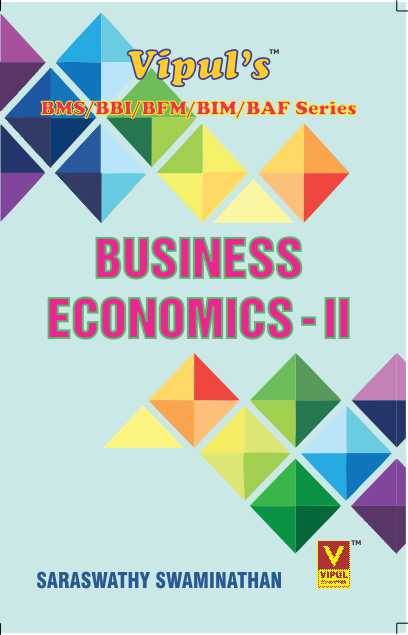
Business Economics - II

(0 customer reviews)
190.00

SYLLABUS

(1)     Introduction to Macroeconomics Data and Theory: Macroeconomics: Meaning, Scope and Importance. Circular flow of aggregate income and expenditure: Closed and Open Economy Models. The Measurement of national product: Meaning and Importance – Conventional and Green GNP and NNP concepts – Relationship between National Income and Economic Welfare. Short Run Economic Fluctuations: Features and Phases of Trade Cycles The Keynesian Principle of Effective Demand: Aggregate Demand and Aggregate Supply – Consumption Function – Investment function – Effects of Investment Multiplier on Changes in Income and Output.   (2)     Money, Inflation and Monetary Policy:      Money Supply: Determinants of Money Supply – Factors influencing Velocity of Circulation of Money. Demand for Money: Classical and Keynesian approaches and Keynes’ liquidity preference theory of interest. Money and prices: Quantity theory of money – Fisher’s equation of exchange – Cambridge cash balance approach. Inflation: Demand Pull Inflation and Cost Push Inflation – Effects of Inflation – Nature of inflation in a developing economy. Monetary policy: Meaning, objectives and instruments, inflation targeting.   (3)     Constituents of Fiscal Policy:     Role of a Government to provide Public goods – Principles of Sound and Functional Finance. Fiscal Policy: Meaning, Objectives - Contra cyclical Fiscal Policy and Discretionary Fiscal Policy. Instruments of Fiscal policy: Canons of taxation – Factors influencing incidence of taxation – Effects of taxation Significance of Public Expenditure – Social security contributions – Low Income Support and Social Insurance Programmes – Public Debt – Types, Public Debt and Fiscal Solvency, Burden of Debt Finance. Union budget: Structure - Deficit concepts – Fiscal Responsibility and Budget Management Act.   (4)     Open Economy: Theory & Issues of International Trade: The basis of international trade: Ricardo’s Theory of Comparative Cost Advantage – Heckscher-Ohlin Theory of Factor Endowments – Terms of Trade – Meaning and Types – Factors determining Terms of Trade – Gains from trade – Free Trade versus Protection. Foreign Investment: Foreign Portfolio Investment – Benefits of Portfolio capital flows – Foreign Direct Investment – Merits of Foreign Direct Investment – Role of Multinational corporations. Balance of Payments: Structure - Types of Disequilibrium - Measures to correct disequilibrium in BOP. Foreign Exchange and foreign exchange market: Spot and Forward rate of Exchange – Hedging, Speculation and Arbitrage – Fixed and Flexible exchange rates – Managed flexibility.]  

BAF — SEMESTER – III

BMS/BBI/BFM/BIM — SEMESTER – IV

Author: Saraswathy Swaminathan

SIXTH EDITION

Description

SYLLABUS

(1)     Introduction to Macroeconomics Data and Theory:

Macroeconomics: Meaning, Scope and Importance.

Circular flow of aggregate income and expenditure: Closed and Open Economy Models.

The Measurement of national product: Meaning and Importance – Conventional and Green GNP and NNP concepts – Relationship between National Income and Economic Welfare.

Short Run Economic Fluctuations: Features and Phases of Trade Cycles

The Keynesian Principle of Effective Demand: Aggregate Demand and Aggregate Supply – Consumption Function – Investment function – Effects of Investment Multiplier on Changes in Income and Output.


(2)     Money, Inflation and Monetary Policy:     

Money Supply: Determinants of Money Supply – Factors influencing Velocity of Circulation of Money.

Demand for Money: Classical and Keynesian approaches and Keynes’ liquidity preference theory of interest.

Money and prices: Quantity theory of money – Fisher’s equation of exchange – Cambridge cash balance approach.

Inflation: Demand Pull Inflation and Cost Push Inflation – Effects of Inflation – Nature of inflation in a developing economy.

Monetary policy: Meaning, objectives and instruments, inflation targeting.


(3)     Constituents of Fiscal Policy:    

Role of a Government to provide Public goods – Principles of Sound and Functional Finance.

Fiscal Policy: Meaning, Objectives – Contra cyclical Fiscal Policy and Discretionary Fiscal Policy.

Instruments of Fiscal policy: Canons of taxation – Factors influencing incidence of taxation – Effects of taxation Significance of Public Expenditure – Social security contributions – Low Income Support and Social Insurance Programmes – Public Debt – Types, Public Debt and Fiscal Solvency, Burden of Debt Finance.

Union budget: Structure – Deficit concepts – Fiscal Responsibility and Budget Management Act.


(4)     Open Economy: Theory & Issues of International Trade:

The basis of international trade: Ricardo’s Theory of Comparative Cost Advantage – Heckscher-Ohlin Theory of Factor Endowments – Terms of Trade – Meaning and Types – Factors determining Terms of Trade – Gains from trade – Free Trade versus Protection.

Foreign Investment: Foreign Portfolio Investment – Benefits of Portfolio capital flows – Foreign Direct Investment – Merits of Foreign Direct Investment – Role of Multinational corporations.

Balance of Payments: Structure – Types of Disequilibrium – Measures to correct disequilibrium in BOP.

Foreign Exchange and foreign exchange market: Spot and Forward rate of Exchange – Hedging, Speculation and Arbitrage – Fixed and Flexible exchange rates – Managed flexibility.]


Narayan Niwas, 161,
Jagannath Shankar Seth Road,
Girgaum, Mumbai 400 004. Maharashtra, INDIA.

Need Help

Monday – Saturday: 10:30AM to 07:00PM

info@vipulprakashan.com

© Copyright 2025 Vipul Prakashan – All Rights Reserved – Powered by MTech