Advanced Cost Accounting (As per NEP 2020)

(0 customer reviews)
275.00

SYLLABUS

MODULE - I: (1)     Process Costing:
  • Introduction: Features of Process, concept of Process Loss, Abnormal Loss, Normal Loss, Abnormal Gain.
  • Computation of Inter-Process Profit: Advantages and Disadvantages, Computation of Equivalent Production – Weighted Average and FIFO.
(2)     Cost Allocation and Activity Based Costing Systems:
  • Cost Allocation: Meaning and Its Types, Relationship between resources, Activities, Cost and Cost Drivers, Methods of Allocating Central Costs – Cost Allocation Using Direct Method, Step Down Method and Reciprocal Method.
  • Activity Based Costing: Introduction, Advantages, Limitations, Identification of Cost Drivers, Practical Problems on Traditional V/s Activity Based Costing System.
  MODULE - II: (3)     Responsibility Accounting:
  • Responsibility Accounting: Meaning, Features, Objective, Assumptions, Problems, Responsibility Centre’s – Cost, Profit, Revenue and Investment.
  • Concept of Controllability: Introduction, Measuring Managerial Performance (ROI and Residual Income Approach), Preparation of Managerial Reports using Segmented Costs and Controllable Costs Approach.
(4)     Strategic Cost Management:
  • Transfer Pricing: Introduction, Advantages and Disadvantages, Setting Transfer Pricing – Negotiated Transfer Pricing, Cost Based Transfer Pricing.
  • Target Costing: Introduction, Concept, Objectives, Comparison between Target Costing and Cost Plus Pricing. Inflation Accounting – Meaning, Features, Conversion of Income Statement, Balance Sheet, Stocks and Net Assets Block using Current Purchasing Power Method.
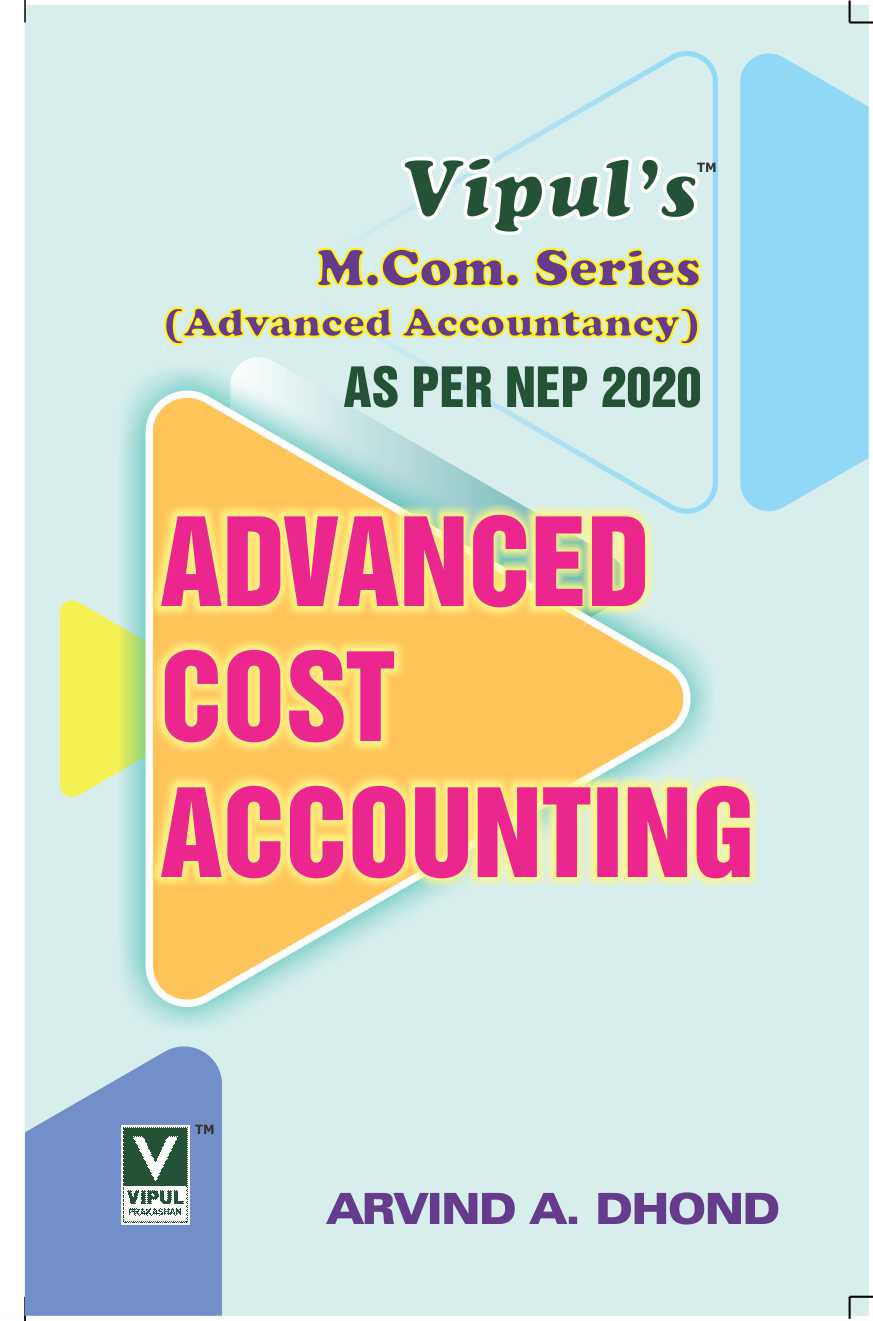
 

FYMCOM — SEMESTER – II

Author: Arvind Dhond

FIRST EDITION

Description

SYLLABUS

MODULE – I:

(1)     Process Costing:

  • Introduction: Features of Process, concept of Process Loss, Abnormal Loss, Normal Loss, Abnormal Gain.
  • Computation of Inter-Process Profit: Advantages and Disadvantages, Computation of Equivalent Production – Weighted Average and FIFO.

(2)     Cost Allocation and Activity Based Costing Systems:

  • Cost Allocation: Meaning and Its Types, Relationship between resources, Activities, Cost and Cost Drivers, Methods of Allocating Central Costs – Cost Allocation Using Direct Method, Step Down Method and Reciprocal Method.
  • Activity Based Costing: Introduction, Advantages, Limitations, Identification of Cost Drivers, Practical Problems on Traditional V/s Activity Based Costing System.


MODULE – II:

(3)     Responsibility Accounting:

  • Responsibility Accounting: Meaning, Features, Objective, Assumptions, Problems, Responsibility Centre’s – Cost, Profit, Revenue and Investment.
  • Concept of Controllability: Introduction, Measuring Managerial Performance (ROI and Residual Income Approach), Preparation of Managerial Reports using Segmented Costs and Controllable Costs Approach.

(4)     Strategic Cost Management:

  • Transfer Pricing: Introduction, Advantages and Disadvantages, Setting Transfer Pricing – Negotiated Transfer Pricing, Cost Based Transfer Pricing.
  • Target Costing: Introduction, Concept, Objectives, Comparison between Target Costing and Cost Plus Pricing. Inflation Accounting – Meaning, Features, Conversion of Income Statement, Balance Sheet, Stocks and Net Assets Block using Current Purchasing Power Method.


Narayan Niwas, 161,
Jagannath Shankar Seth Road,
Girgaum, Mumbai 400 004. Maharashtra, INDIA.

Need Help

Monday – Saturday: 10:30AM to 07:00PM

info@vipulprakashan.com

© Copyright 2025 Vipul Prakashan – All Rights Reserved – Powered by MTech